
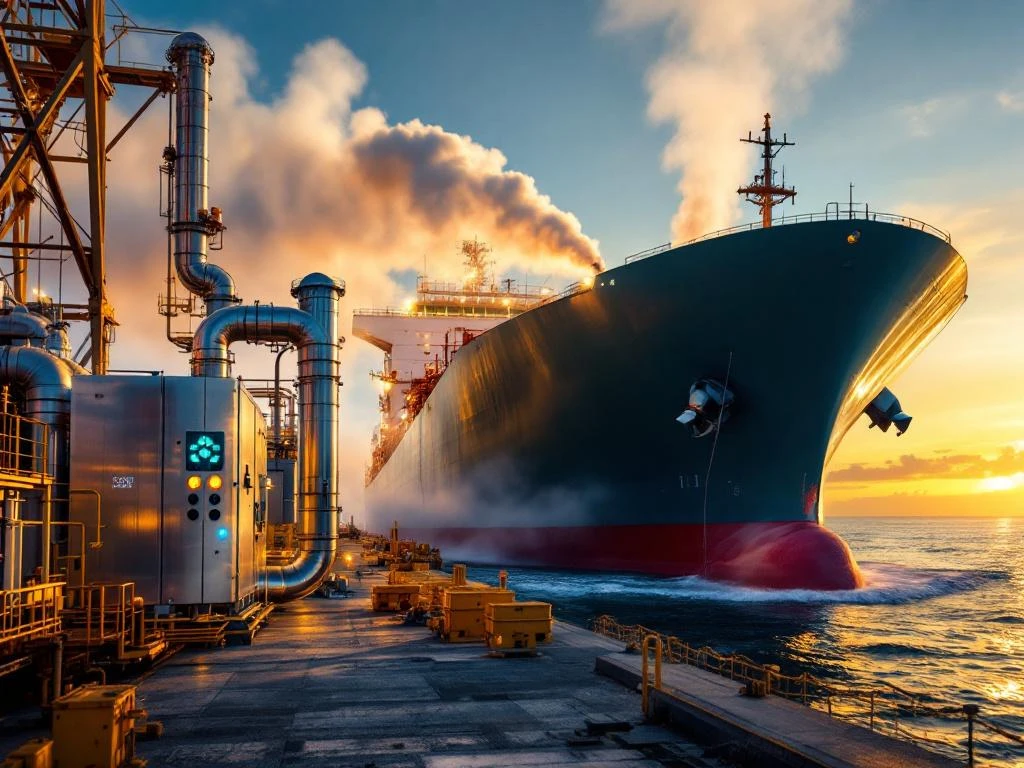
When a tanker captain approaches a port terminal, one important question dominates their operational planning: how can they safely and legally degas their vessel without facing delays, fines, or environmental violations? Modern tanker degassing operations have evolved from simple atmospheric releases to sophisticated processes requiring careful attention to safety protocols, regulatory compliance, and environmental protection.
This comprehensive guide will equip you as a maritime professional with important knowledge for conducting safe and legal degassing operations whilst addressing the growing regulatory pressures and environmental responsibilities you face in today’s shipping industry. You’ll discover the fundamental principles that govern effective degassing, explore cutting-edge emission reduction technologies, and learn how to implement procedures that protect both crew safety and environmental integrity.
Understanding tanker degassing fundamentals and safety requirements
Tanker degassing operations involve the controlled removal of vapours and residual gases from cargo tanks following the discharge of liquid cargo. This process serves multiple important purposes: preparing tanks for inspection, maintenance, or loading different cargo types, and ensuring vessel safety by eliminating potentially explosive or toxic atmospheres.
Different vessel types require tailored approaches to degassing. Chemical tankers carrying volatile organic compounds present distinct challenges compared to petroleum product carriers, whilst inland waterway vessels face different regulatory frameworks than ocean-going ships. The hazardous gas management process must account for cargo residue characteristics, tank construction, and operational environment.
Safety considerations form the foundation of all degassing activities. You must understand the toxic and explosive properties of residual vapours, implement proper ventilation procedures, and maintain continuous atmospheric monitoring. The process requires careful coordination between deck officers, engineering staff, and shore-based terminal operators to ensure comprehensive risk management.
Effective degassing operations balance speed and safety, recognising that shortcuts in procedure can lead to catastrophic consequences for crew, vessel, and environment.
What are the legal compliance requirements for degassing operations?
International maritime regulations establish the framework for legal compliance tanker operations, with MARPOL Annex VI providing fundamental emission control requirements. The Convention for the Collection, Deposit and Reception of Waste in Rhine and Inland Navigation (CDNI) specifically addresses inland waterway degassing, implementing phased restrictions that have transformed operational practices.
Recent regulatory developments have significantly tightened degassing restrictions. The Human Environment and Transport Inspectorate (ILT) now enforces strict penalties for illegal degassing, with fines starting at €30,000 for initial violations and escalating to €50,000 for repeat offences. Detection methods include drone surveillance, electronic nose technology, and dedicated inspection teams.
Documentation requirements have become increasingly stringent, demanding detailed records of degassing locations, methods you employ, and emission measurements. You must demonstrate compliance through comprehensive logbook entries, atmospheric monitoring data, and certification from approved facilities or equipment providers.
Local environmental regulations often impose additional restrictions beyond international requirements. Port authorities may designate specific degassing zones, mandate particular procedures, or require advance notification before you commence operations. Understanding these localised requirements prevents costly delays and regulatory violations.
How do advanced emission reduction technologies transform degassing?
Flameless oxidation technology represents a revolutionary approach to emission reduction degassing, transforming harmful vapours into clean air through advanced catalytic processes. These systems operate at lower temperatures than traditional thermal oxidation, eliminating the need for additional fuel or support gases whilst achieving remarkable emission reduction performance.
Modern clean air technology addresses the fundamental challenge you face as a tanker operator: where to safely process toxic vapours following recent degassing bans. Advanced units designed to convert harmful emissions into clean air offer portable, scalable solutions suitable for various vessel types and operational requirements. To understand how these emission reduction systems work, it’s important to recognise their sophisticated catalytic processing capabilities.
The technology’s effectiveness extends beyond simple emission control. By processing vapours at the source, these systems eliminate the need for atmospheric release, ensuring compliance with increasingly stringent environmental regulations compliance requirements including the Corporate Sustainability Reporting Directive (CSRD).
| Technology Aspect | Traditional Methods | Advanced Oxidation Systems |
|---|---|---|
| Emission Reduction | Minimal processing | Near-zero emissions |
| Energy Requirements | Variable | Low temperature operation |
| Regulatory Compliance | Increasingly restricted | Exceeds current standards |
| Operational Flexibility | Location dependent | Mobile deployment capable |
Implementing safe degassing procedures and risk management
Safe degassing procedures begin with comprehensive risk assessment, evaluating cargo residue properties, atmospheric conditions, and operational constraints. Personnel safety measures include proper respiratory protection, atmospheric monitoring equipment, and emergency response protocols tailored to specific hazard profiles.
Equipment requirements extend beyond basic ventilation systems to include sophisticated monitoring instruments, emergency shutdown capabilities, and communication systems linking vessel operations with shore-based support. Integration of emission reduction technologies requires careful planning to ensure seamless operation without compromising safety protocols.
Emergency response protocols must address multiple scenarios: equipment failure, atmospheric contamination, personnel exposure, and environmental release incidents. Regular training ensures crew competency in both routine operations and emergency situations, whilst documented procedures provide clear guidance for consistent implementation.
The integration of advanced emission control systems into standard operations requires updated procedures addressing equipment startup, monitoring requirements, and maintenance schedules. These systems become integral components of the vessel’s safety management system, requiring regular inspection and performance verification.
Evaluating degassing effectiveness and environmental impact
Measuring degassing operation success requires comprehensive monitoring of atmospheric conditions, emission levels, and operational efficiency. Performance metrics include vapour concentration reduction rates, processing time requirements, and environmental compliance verification through continuous emission monitoring systems.
Industrial air pollution control effectiveness depends on accurate measurement and documentation. Modern monitoring systems provide real-time data on emission levels, processing efficiency, and environmental impact, enabling you to demonstrate regulatory compliance and identify optimisation opportunities.
Continuous improvement strategies focus on operational efficiency, environmental performance, and cost effectiveness. Regular performance reviews identify trends, highlight equipment maintenance requirements, and support decision-making for technology upgrades or procedural modifications.
How do you measure the true environmental impact of your degassing operations beyond regulatory compliance? Advanced monitoring capabilities enable comprehensive assessment of environmental benefits, supporting sustainability reporting requirements and demonstrating corporate environmental responsibility.
Synthesising principles for sustainable tanker degassing excellence
Sustainable degassing methods integrate safety, regulatory compliance, and environmental protection into unified operational frameworks. Excellence requires understanding that effective degassing operations serve multiple stakeholders: crew safety, environmental protection, regulatory compliance, and operational efficiency.
Best practices emphasise proactive approaches rather than reactive compliance. Implementing advanced emission reduction technologies, maintaining comprehensive documentation, and fostering continuous improvement cultures position you for success in an increasingly regulated environment.
Future considerations include evolving regulatory requirements, advancing technology capabilities, and growing environmental awareness. You will thrive in the changing maritime environment when you embrace innovative solutions and maintain flexibility in your operational approaches.
The transformation from traditional atmospheric release to controlled, near-zero emission processing represents more than regulatory compliance—it demonstrates commitment to environmental stewardship and operational excellence. By implementing these important principles, you can achieve safe, legal, and environmentally responsible degassing operations that protect crew, community, and environment whilst maintaining operational efficiency. At Superflox, we support maritime professionals in achieving these goals through advanced emission reduction technologies and comprehensive operational guidance. For specific inquiries about implementing these solutions, contact our degassing technology specialists for expert assistance.