
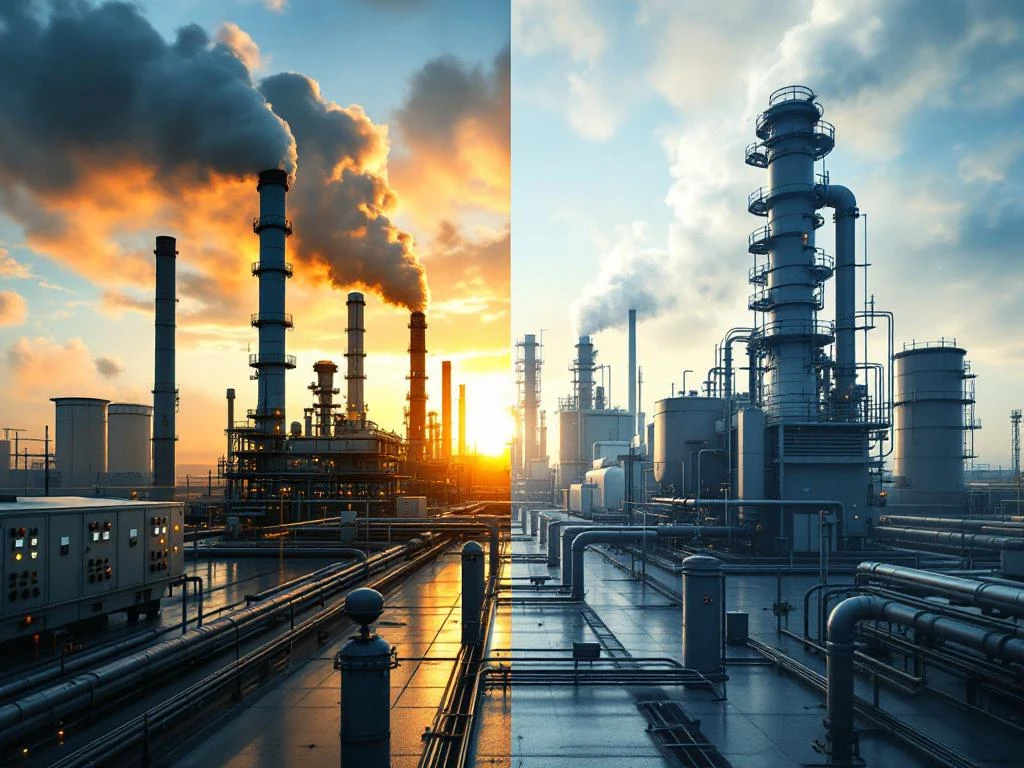
Industrial emissions present one of the most pressing environmental challenges of our time, with facilities worldwide grappling to find effective solutions that balance operational efficiency with environmental responsibility. As regulatory frameworks tighten and sustainability reporting becomes mandatory, choosing between emission reduction technologies becomes increasingly important. Two prominent approaches have emerged in environmental technology: flameless oxidation and traditional degassing methods.
Understanding the fundamental differences between these approaches helps industries achieve meaningful emission reduction whilst maintaining operational viability. This comparative analysis will explore how each technology addresses industrial air pollution, examining their mechanisms, efficiency profiles, and practical implementation considerations to help you make informed strategic decisions in sustainable manufacturing.
Understanding flameless oxidation and traditional degassing fundamentals
Flameless oxidation represents a revolutionary approach to emission control that operates through controlled chemical reactions without visible flame combustion. This clean air technology functions by creating optimal conditions for oxidation at significantly lower temperatures than conventional methods, typically operating at half the temperature of traditional combustion processes.
The molecular process involves the controlled conversion of harmful gases through oxidation reactions that transform hazardous compounds into carbon dioxide and water vapour. Unlike conventional burning, this method prevents the formation of nitrogen oxides (NOx) by maintaining precise temperature control throughout the reaction chamber.
Traditional degassing, conversely, encompasses various methods including direct venting, thermal oxidation, and flaring systems. These approaches typically rely on high-temperature combustion or direct release mechanisms to manage industrial emissions. The fundamental principle involves either burning off volatile compounds at elevated temperatures or releasing them directly into the atmosphere under controlled conditions.
Temperature management creates the main distinction: whilst traditional methods often require extreme heat to achieve complete combustion, flameless oxidation achieves superior results through chemistry rather than brute thermal force.
How do flameless oxidation and traditional degassing differ in mechanism?
The operational mechanisms between these technologies reveal stark differences in energy consumption, safety profiles, and reaction pathways. Flameless oxidation systems operate through controlled oxidation processes that require no preheating or premixing, eliminating explosion risks commonly associated with traditional combustion methods.
Energy consumption patterns differ significantly between approaches. Traditional degassing methods, particularly thermal oxidation systems, demand substantial energy inputs to achieve the high temperatures necessary for complete combustion. These systems often require support gases and extensive preheating processes, creating ongoing operational costs.
Flameless oxidation technology efficiently processes low calorific gases without additional energy requirements for preheating. The system maintains stability across varying gas compositions, handling gases with calorific values as low as 1-15 MJ/Nm³ whilst ensuring consistent performance.
Catalyst usage represents another fundamental difference. Traditional systems often rely on expensive catalysts that require regular replacement and maintenance. The flameless approach minimises catalyst dependency through optimised reaction chamber design and controlled oxidation conditions.
What are the efficiency and environmental impact differences?
The environmental performance gap between these technologies is substantial, particularly regarding NOx reduction and overall emission control effectiveness. Flameless oxidation achieves comprehensive emission reduction by preventing harmful byproduct formation during the conversion process.
Traditional degassing methods, whilst capable of reducing certain emissions, often create secondary pollutants through incomplete combustion or high-temperature reactions. Flaring systems, for example, can generate significant NOx emissions due to the extreme temperatures required for effective combustion.
The efficiency metrics extend beyond simple emission reduction to encompass energy utilisation and operational sustainability. Traditional thermal oxidation systems typically achieve emission reduction but at considerable energy cost, creating a trade-off between environmental benefit and energy consumption.
Flameless oxidation technology addresses this challenge by achieving substantial CO2 emissions reduction whilst maintaining energy efficiency. The lower operating temperatures result in reduced energy consumption whilst delivering superior emission control performance across diverse industrial applications.
Implementation considerations for industrial applications
Scalability represents an important factor in technology selection, with different approaches offering varying degrees of flexibility for industrial deployment. Flameless oxidation systems demonstrate remarkable adaptability, scaling from compact containerised units suitable for mobile applications to large-scale industrial installations capable of handling substantial emission volumes.
Integration requirements with existing systems vary significantly between technologies. Traditional degassing infrastructure often requires extensive modifications to existing operations, including new piping systems, safety equipment, and regulatory compliance measures. The retrofit complexity can create operational disruptions and substantial capital investment requirements.
Maintenance considerations play a vital role in long-term operational planning. Traditional systems typically require regular maintenance of high-temperature components, catalyst replacement, and extensive safety system monitoring. These requirements translate into ongoing operational costs and potential downtime for maintenance activities.
The operational cost profile differs markedly between approaches. Whilst traditional systems may have lower initial capital costs, the ongoing expenses for energy consumption, catalyst replacement, and maintenance can create substantial long-term financial burdens.
Evaluating long-term sustainability and compliance outcomes
Regulatory compliance capabilities represent a critical consideration as environmental standards continue to evolve. The Corporate Sustainability Reporting Directive (CSRD) and similar regulations worldwide demand comprehensive emission reduction documentation and measurable environmental improvements.
Flameless oxidation technology offers advantages in meeting stringent regulatory requirements through consistent, measurable emission reduction performance. The technology’s ability to handle diverse gas compositions whilst maintaining stable emission control makes it particularly suitable for industries facing evolving regulatory landscapes.
Future-proofing considerations favour technologies that can adapt to increasingly stringent environmental standards without requiring complete system replacement. The inherent flexibility of flameless oxidation systems positions them advantageously for long-term regulatory compliance.
Strategic recommendations for optimal emission reduction align with broader environmental technology advancement trends. Industries seeking sustainable solutions should evaluate technologies based on their ability to deliver consistent performance, adapt to changing requirements, and provide measurable environmental benefits whilst maintaining operational efficiency.
The comparative analysis reveals that whilst traditional degassing methods have served industrial applications historically, the evolving regulatory landscape and sustainability imperatives favour advanced technologies that can deliver superior environmental performance with operational efficiency. Your choice ultimately depends on specific industrial contexts, emission profiles, and long-term sustainability objectives. At Superflox, we help you navigate these decisions to achieve optimal emission reduction outcomes for your specific industrial applications. To learn how our technology works or discuss your emission reduction needs, reach out to our team today.